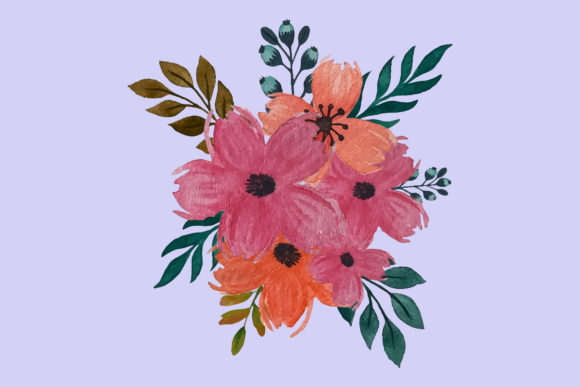
Watercolor Floral Frames: A Versatile Tool for Creative Projects
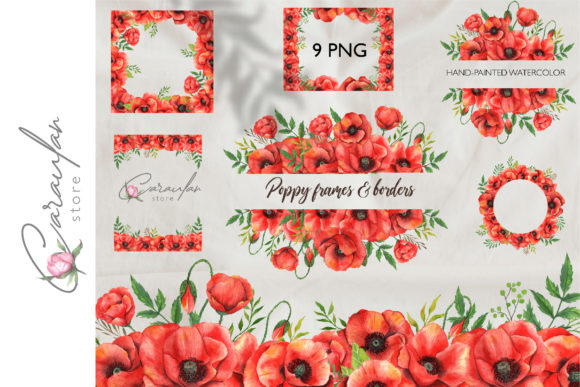
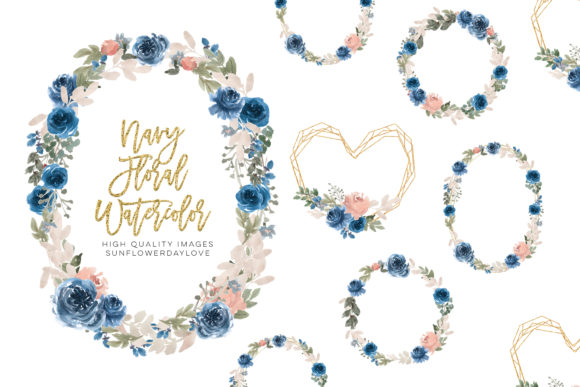
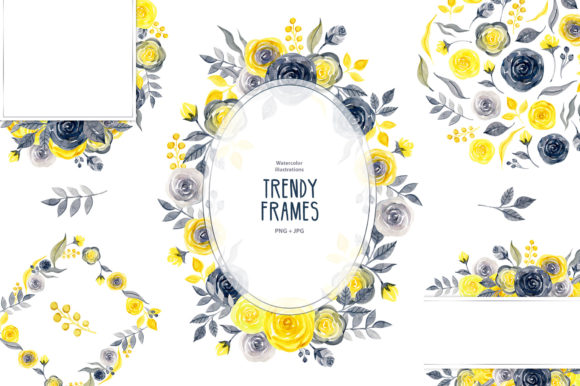
In the realm of digital design resources, watercolor floral clipart occupies a distinct and cherished niche. Among these, Watercolor Flowers Frames represent a specific, highly functional subset. These are not merely standalone floral illustrations; they are structured compositions where hand-painted blooms form borders, wreaths, or encircling motifs, typically delivered as PNG files with transparent backgrounds. This format makes them immediately usable, acting as ready-made decorative containers for text, photos, or other focal points in a design.
The Distinct Appeal of Hand-Painted Digital Assets
What sets authentic Watercolor Flowers Frames apart from generic digital borders is the tangible evidence of the artist's hand. True watercolor clipart captures the soft blends, gentle gradients, and organic texture of pigment on paper. This results in frames that feel less sterile and more artistic than those created purely with vector tools or flat digital painting. The transparency of the PNG background is a critical technical feature, allowing designers to layer these frames over any colored background or material without the need for complex editing, making them accessible even to those with limited software expertise.
When evaluating digital decorative elements, you often encounter a spectrum from hyper-realistic vector graphics to abstract geometric patterns. Watercolor frames sit comfortably in the middle, offering artistic warmth without overwhelming photorealism. Compared to vector floral frames, which can appear sharp and uniformly perfect, watercolor versions introduce a welcome imperfection and softness. This can be a significant advantage for projects aiming to convey a handmade, personal, or vintage aesthetic.
Considering Alternatives and Complementary Resources
It’s helpful to understand where Watercolor Flowers Frames fit within the broader ecosystem of design assets. They are a specialized solution. For instance, if your primary need is a single, scalable floral icon to use repetitively, a set of individual watercolor flowers might be a better foundational purchase. Conversely, if you require a complete, balanced decorative border instantly, the frame format saves considerable layout time.
Other alternatives include photographic frames of real flowers, which offer high realism but less flexibility in color adjustment, and fully editable vector frames, which provide infinite scalability and color change but often lack the organic texture. The decision here hinges on your priority: immediate artistic-ready usability versus total editorial control. Watercolor Flowers Frames excel in the former category, offering a curated artistic look that is difficult to replicate quickly even with advanced software skills.
Practical Applications and Ideal Use Cases
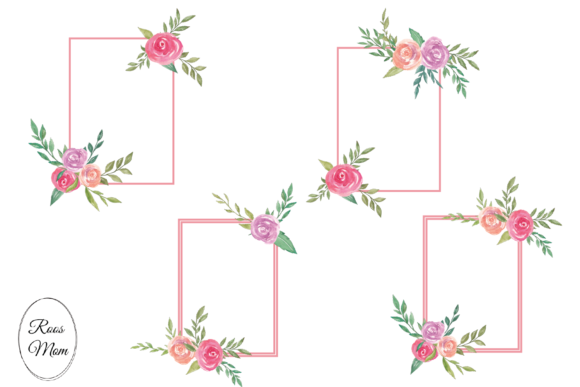
The described collection, offering four variations, is tailored for specific, practical scenarios. The common mentions—invitations, cards, scrapbook supplies, and handmade craft—are accurate, but the application extends further.
- Event Stationery: For wedding invites, baby announcements, or party decorations, these frames provide an instant elegant focus. Their soft palette often coordinates easily with event color schemes.
- Digital and Hybrid Crafts: They are perfect for creating banner headers for blogs, social media graphics, or digital planners. The transparent PNG makes them ideal for overlaying on digital photos in simple apps.
- Small Business Branding: A café, florist, or boutique might use one frame consistently on marketing materials to establish a gentle, artisanal brand accent.
A key strength is their utility for crafters who work in both digital and physical spaces. You can print the frame onto cardstock for a physical card, or use it digitally for an online invitation. This cross-medium functionality is a notable benefit compared to purely physical craft stamps or purely digital vector files that require specialized printers for physical use.
Evaluating Limitations and Trade-offs
An informed decision requires acknowledging trade-offs. The hand-painted nature of Watercolor Flowers Frames means each element is fixed. You cannot easily separate the roses from the leaves in the frame or change the pink hue to a blue without advanced photo editing skills, which may alter the authentic watercolor texture. This is a trade-off for the artistic authenticity.
Furthermore, while the four-frame collection offers variety, it is not a limitless library. A project requiring dozens of distinctly different frame styles might need a larger bundle or a more foundational asset type, like a set of individual watercolor elements you can arrange yourself. The frame format also implies a certain size and aspect ratio. If your project requires a very tall, narrow, or unusually shaped border, a pre-composed frame might not fit, making a customizable alternative more suitable.
When Are Watercolor Floral Frames the Right Choice?
Choosing Watercolor Flowers Frames is often optimal under a set of common conditions. Firstly, when time is a constraint. If you need a professional-looking, artistic result quickly for a one-off project like an invitation, these ready-made frames eliminate composition time. Secondly, when the "handmade" aesthetic is a core goal. For projects competing in a market saturated with crisp, digital designs, the soft watercolor texture can be a unique differentiator.
They are also a strong fit for individuals whose software proficiency is moderate. The PNG format is universally compatible, from advanced Adobe software to simple mobile apps. You don't need to master pen tools or layers to use them effectively. Finally, they are excellent when your project scope is defined. Knowing you need exactly four different card designs for a series of events makes a four-frame collection a logical, efficient purchase.
When Another Option Might Be Necessary
There are equally valid situations where a different resource would serve you better. If your project demands absolute scale flexibility—needing the same border from a business card size to a poster size without loss of quality—a vector graphic format, though potentially less artistic, is technically superior.
If color customization is paramount, such as needing to match a specific corporate pantone exactly across all decorative elements, a vector file or a set of monochrome elements you can colorize would be more practical. Also, for large-scale, repetitive production, like creating a hundred different blog post headers, a smaller collection of four frames might feel limiting, prompting a search for a more extensive library or a template system where you can swap elements.
Another consideration is style. While watercolor is popular, your project might call for a bolder, geometric, or minimalist aesthetic. In such cases, exploring alternative stylistic categories—like modern line art frames or ethnic pattern borders—would be a necessary step.
Making an Informed Selection Decision
Your final decision should balance your project's aesthetic goals, technical requirements, and your own resource constraints. Assess the importance of artistic texture versus editability. Gauge your need for speed and ease versus customization scope. Consider the project volume against the number of assets in the collection you're viewing.
For many creators, a set of Watercolor Flowers Frames acts as a versatile, reliable staple in their toolkit. It solves a common design problem elegantly. For others, it might be a complementary specialty item used for specific projects alongside other types of graphics. By understanding both their distinct advantages and their inherent limitations, you can better determine if they are the core solution for your current task or a useful addition to a broader collection of creative resources.