The Sunny Fern Collection: A Comprehensive Toolkit for Modern Creators
In the landscape of digital design resources, collections that offer both depth and versatility stand apart. The Sunny Fern Collection represents such a resource, providing a unified set of graphical elements centered around a cohesive botanical theme. Rather than a single asset, it is a multifaceted toolkit engineered for scalability across numerous projects. This discussion explores the collection's structure, its inherent characteristics, and the practical pathways it opens for various users, from professional designers to enthusiastic hobbyists.
Anatomy of the Collection: From Elements to Compositions
The Sunny Fern Collection is systematically organized, moving from foundational components to complex arrangements. This layered approach allows users to engage at different levels of complexity.
Core Individual Elements
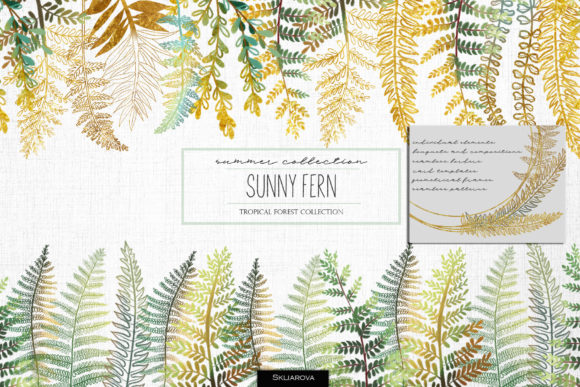
The foundation consists of 24 individual fern illustrations provided as PNG files with transparent backgrounds. Each element is rendered at a high resolution of 3000x4000 pixels, corresponding to a physical size of approximately 10 by 13 inches. This granularity ensures that every frond, leaf, and botanical detail remains crisp whether scaled down for a logo or enlarged for a wall mural. Having these separate elements empowers creators to build custom arrangements unique to their vision, breaking free from predefined layouts.
Pre-Assembled Designs for Immediate Use
For projects requiring swift deployment or inspirational starting points, the collection includes 12 pre-made compositions and bouquets. These are also PNG files with transparent backgrounds, formatted at 3000x3000 pixels. These compositions demonstrate sophisticated grouping of the ferns, showing how the individual elements can interact harmoniously. They serve not only as ready-to-use graphics but also as educational references for understanding spatial balance and floral design within a digital format.
Frames, Borders, and Patterns: Expanding the Context
Moving beyond the central fern motifs, the collection offers contextual and decorative assets. Eleven floral, golden, and geometric frames provide enclosures and accents for content, sized at a substantial 5000x5000 pixels. Two seamless borders, at 8000x2500 pixels, offer repeating edge designs ideal for document margins or textile edges. Furthermore, six seamless JPEG patterns allow the fern theme to be extended across infinite surfaces as backgrounds or textile prints. This suite transforms the ferns from isolated objects into part of a complete environmental design language.
Ready-Made Applications: Cards and Stationery
The inclusion of four A3-sized card designs as JPEG files bridges the gap between digital asset and final product. These cards demonstrate a direct application, showing how the elements, compositions, and frames can be synthesized into a polished, print-ready item. They act as a proof of concept for the collection's viability in the stationery and greeting card market.
The Technical Profile: Quality and Flexibility
Uniform technical specifications across the collection ensure reliability. All illustrations are set at 300 dpi in the RGB color space, optimized for both digital display and a wide range of print processes. The consistent use of transparent backgrounds in the PNG files is a critical feature, removing the labor-intensive step of clipping and allowing for effortless layering over any other background color or image. The mixture of PNG and JPEG formats is strategic: PNG for layered, editable elements requiring transparency; JPEG for final, flattened compositions like patterns and cards where file size and standard compatibility are priorities.
Scale and Resolution Considerations
The deliberate choice of large base dimensions—from 3000px up to 8000px—means these assets are inherently suited for large-format output. A fern element at 3000x4000 pixels can be printed at its native 10x13 inch size at 300 dpi, or scaled down significantly for a website logo without loss of detail. This high-resolution foundation mitigates the common problem of asset insufficiency when a project scope expands from a small web graphic to a large physical banner.
A Spectrum of Practical Applications
The utility of the Sunny Fern Collection is defined by its adaptability. Its applications flow naturally from the characteristics of its components.
For wedding and event design, the pre-made bouquets and elegant golden frames can be directly integrated into invitations, signage, and program décor. The seamless borders might be used on table runners or napkin edges, while the individual elements could personalize monograms or crests.
In commercial branding and logo design, the clean, transparent PNGs of individual ferns allow for the creation of unique, nature-inspired logos. The geometric frames might serve as container shapes for brand marks, or the patterns could form distinctive backgrounds for brand collateral.
The realm of textile and product design is a prominent use case. The high-resolution patterns and individual elements are suitable for printing onto fabrics for T-shirts, linens, or backpacks. The seamless nature of the patterns and borders is particularly key here, ensuring designs can repeat across yards of material without awkward breaks.
Digital and web design benefits from the assets' scalability and transparency. Fern elements can become decorative icons, website headers, or featured graphics in blog posts. The pre-made compositions might serve as striking hero images for landing pages.
For DIY creators and hobbyists, the collection provides an accessible entry point into design. The pre-made cards and compositions offer beautiful results without requiring advanced software skills, while the individual elements invite learning and experimentation with basic graphic editing tools to create personalized gifts, home décor, or craft projects.
Workflow Integration and User Considerations
Integrating such a collection into a creative workflow requires some strategic thinking. Professionals might start with the pre-made compositions for rapid client mockups, then deconstruct and rebuild using individual elements for final, customized deliverables. Hobbyists might begin with the ready-made cards for immediate printing, then gradually explore using the frames to create their own card variations.
A key consideration is file management. With multiple asset types and sizes, organizing the files by category—elements, compositions, frames, patterns—is advisable to avoid confusion. Additionally, while the PNGs offer transparency, users working with the JPEG patterns or cards should be mindful of their intended use; these are best for final outputs where no further background layering is needed.
The collection's botanical theme, while versatile, naturally aligns with projects seeking an organic, elegant, or tranquil aesthetic. It may be less suitable for projects requiring a stark, minimalist, or highly technological visual tone. Understanding this thematic scope helps in selecting the right assets for the project's emotional and brand message.
Beyond the Single Use: Combining Assets
The true potential is unlocked not by using assets in isolation, but in combination. A designer might take a seamless pattern as a background, overlay a pre-made bouquet, and encase it within one of the golden frames to create a complex poster design. This interoperability, ensured by consistent quality and transparency, is a significant advantage.
The Value of a Cohesive Digital Collection
For educators and researchers in design fields, the Sunny Fern Collection can serve as a practical case study in thematic asset library creation. It demonstrates how a single visual concept—the fern—can be expanded across multiple asset types and scales to service a vast array of outputs. For business owners, particularly in the stationery, gift, or décor sectors, such a collection can be the entire raw material source for a product line, ensuring all items share a consistent, professional-quality visual language.
Ultimately, the collection shifts the creator's task from foundational illustration to creative assembly and application. It provides a high-quality, thematic raw material, reducing the time and skill barrier required for original botanical illustration, and redirecting focus toward composition, application, and market-specific design. This model of resource—detailed, scalable, and comprehensively themed—aligns with the needs of a modern, multi-platform creative environment where a single design idea must fluidly adapt to both digital screens and physical products.