Your Creative Toolkit: The Versatility of a Flower Clipart Collection
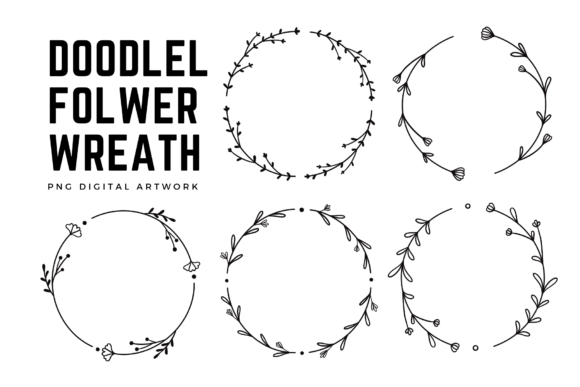
You’ve likely encountered a moment in your creative workflow where a project needs that final touch of beauty or a gentle softening of its edges. Whether you’re designing a website, crafting a greeting card, or preparing a presentation, finding the right visual element can be time-consuming. This is where a dedicated Flower Clipart Collection becomes more than just decorative images; it transforms into a practical asset. Specifically, a collection of hand drawn floral line art offers a unique blend of organic elegance and digital convenience. Each piece is an easy hand draw of flowers, capturing the natural imperfection and charm of botanical sketches, but delivered in ready-to-use PNG files with transparent backgrounds at 300 dpi resolution. This combination is the key to its utility.
Where Digital Botany Meets Real-World Projects
Let’s move beyond abstract descriptions and look at concrete situations. Imagine you’re a small business owner finalizing your spring promotion email. A block of text about your new service feels stark. Placing a single, delicate line art blossom in the header immediately ties the message to a season, evokes freshness, and breaks up the layout without overwhelming the content. The transparent background means you aren’t fighting with a white box; the flower simply sits elegantly over your chosen color scheme. This is a common, almost universal need: to add thematic or aesthetic context quickly.
Another scenario: a teacher creating classroom materials for a biology unit on plant life. Photographs can be complex, but a clear, hand drawn botanical illustration can isolate the structure of a flower for students to label. The high 300 dpi resolution ensures that if the worksheet is printed, the lines remain crisp and professional. Here, the clipart serves an educational purpose, moving from decoration to a functional teaching aid.
Industries and Hands That Benefit
The applications span widely because the aesthetic of hand drawn art is universally approachable and non-threatening. In the wedding industry, planners and stationery designers use these elements to create cohesive themes for invitations, websites, and signage. The line art feel is romantic and personal, avoiding the coldness of some vector graphics. Crafters and DIY enthusiasts integrate these PNGs into physical projects, printing them onto fabric, wood, or paper for personalized gifts. The transparency allows for easy layering in digital design software before printing.
Web designers and graphic artists, often under tight deadlines, benefit profoundly. Having a pre-drawn collection means not needing to illustrate every floral element from scratch. They can focus their time on layout, interaction, and color theory, using these botanical assets as consistent visual motifs across a site’s pages. For a blog focused on wellness or lifestyle, scattering such drawings throughout posts creates a serene, consistent brand identity. The strength here is efficiency married with a specific artistic style.
Considering Your Workflow Before You Use Clipart
Before diving into using any Flower Clipart Collection, it’s wise to pause and consider your project’s needs. First, think about scale and reproduction. The 300 dpi resolution is excellent for print, but if you’re only designing for digital screens (websites, social media), you might resize the files to optimize loading speeds. Always check the final size you intend to use.
Second, consider stylistic cohesion. Hand drawn line art has a specific, often whimsical character. Is this tone aligned with your brand or project’s message? For a corporate financial report, it might not be. For a boutique tea shop’s menu, it’s perfect. The collection’s strength is its artistic style, which is also its potential limitation if your needs call for ultra-modern or photorealistic graphics.
Finally, think about manipulation. These are typically provided as PNGs, meaning you can change their color easily in programs like Photoshop, Canva, or even PowerPoint by applying color overlays. This flexibility lets you adapt a single black line drawing to match any color palette you’re working with. However, because they are raster images (PNG), not vector (like SVG), resizing them to much larger dimensions than intended can sometimes lead to a loss of crispness, though starting at 300 dpi mitigates this significantly.
Unpacking the Composition: Ten Unique Botanical Pieces
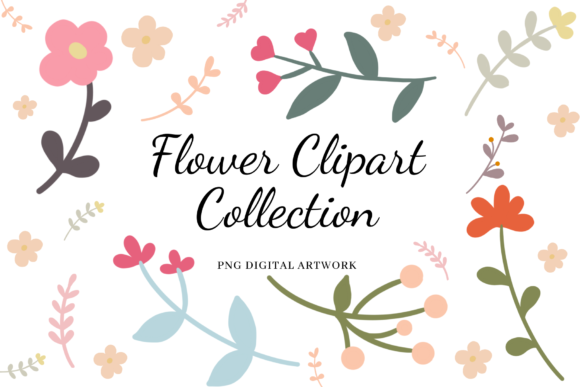
A collection comprising ten distinct PNGs isn’t just about quantity; it’s about providing a versatile set of compositions. You might find a solitary rose, a cluster of wildflowers, a spreading fern, or a minimalist single leaf. This variety allows you to choose based on the space you need to fill and the symbolism you wish to convey. A large, complex bouquet might serve as a central hero image, while a tiny, simple bud could be a repeated pattern element in a footer. When working, observe how the negative space within each drawing interacts with your layout. The open, line-based nature of hand drawn floral line art often creates a light feel, preventing designs from becoming visually heavy.
The Everyday Creative’s Silent Partner
For the hobbyist, the entrepreneur, the educator, or the professional designer, such a resource quietly solves problems. It’s the difference between staring at a blank corner of a brochure and having a graceful solution at hand. It allows someone with no illustration skill to incorporate beautiful botanical art into their work, elevating its perceived value and emotional resonance. The fact that the files are compatible with a vast variety of programs—from professional Adobe suites to free online platforms—democratizes design. You aren’t locked into a specific software ecosystem.
In practice, using the collection often becomes iterative. You might start by using one flower on a blog post header. Later, you realize the same set can provide icons for a navigation menu, background elements for a quote graphic, and even patterns for product packaging. This repeated use across different touchpoints builds visual consistency, which is a cornerstone of brand recognition and professional presentation. The key is to see the flowers not as static decorations, but as flexible design components whose color, size, and placement you control.
Ultimately, a Flower Clipart Collection of hand drawn botanical art bridges the gap between the organic world and the digital canvas. It provides the texture of nature and the craft of human drawing in a format that respects the realities of modern creative work: time constraints, software diversity, and the need for adaptable beauty. By understanding its practical strengths—the transparent PNG format, the print-ready resolution, and the stylistic tone of line art—you can confidently apply it to decorate your work, making it not only more attractive but more communicative and complete.