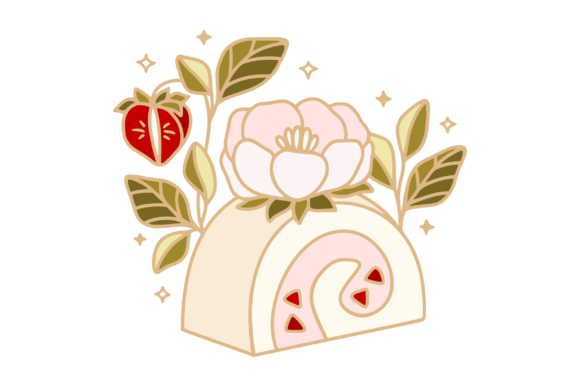
The Strawberry, Vanilla, Peony Flower Cake: From Artisanal Delight to Branding Icon
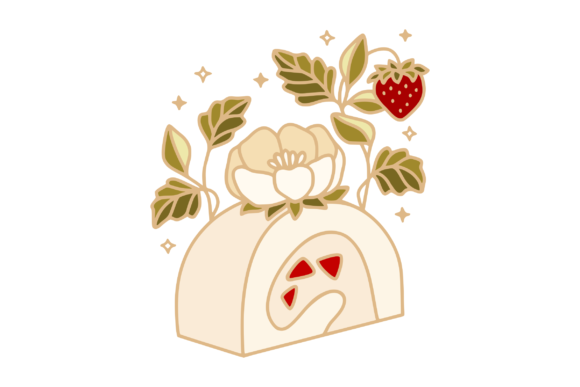
In the confluence of culinary artistry and visual design, a particular creation has begun to capture the imagination of professionals and creators alike: the Strawberry, Vanilla, Peony Flower Cake. This confection is not merely a dessert; it represents a synthesis of flavor, aesthetics, and symbolic meaning. Typically, it features layers of vanilla-infused sponge or pastry, adorned with fresh strawberries or their preserves, and crowned with intricate peony flower decorations—often crafted from buttercream, marzipan, or delicate sugar paste. Its appeal, however, extends far beyond the bakery counter. The visual motif of this cake, especially when rendered as a cute hand-drawn illustration, has become a versatile asset for branding, packaging, and creative projects.
A Symbol of Modern Sensory Branding
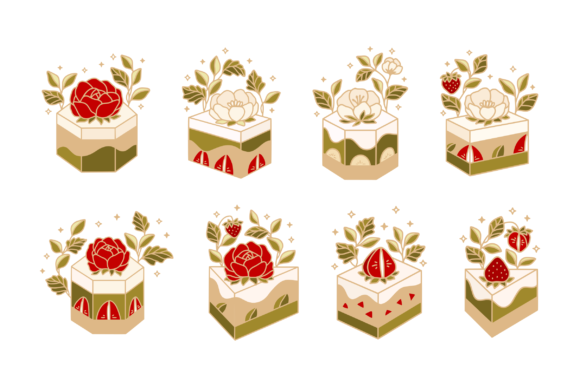
The ascent of the Strawberry, Vanilla, Peony Flower Cake as a popular design element is deeply intertwined with broader trends in consumer psychology and market differentiation. Today's audiences, particularly within lifestyle and creative sectors, crave authenticity and multisensory experience. A brand's visual identity must evoke more than just function; it must suggest flavor, craftsmanship, and emotional resonance. The cute hand-drawn style of this cake illustration—featuring the strawberry, peony flower, vanilla cream, leaf, and floral details—does precisely that. It communicates artisanal care, natural ingredients, and a touch of whimsical elegance, qualities highly valued in markets ranging from specialty food products to boutique stationery.
This trend reflects a shift from generic, corporate logos to narrative-driven, illustration-based branding. Entrepreneurs and marketers recognize that such imagery can forge a stronger, more personal connection with their audience. For a bakery, a sticker featuring this design instantly signals quality and creativity. For a greeting card company, it conveys warmth and celebration. The provided ZIP file containing EPS, JPG, and PNG formats underscores its practical utility, allowing seamless integration across print and digital mediums—from product labels to DIY project blogs.
Integration into Creative Workflows and DIY Culture
The relevance of this clipart element is amplified by the evolving workflows of freelancers, designers, and enthusiasts. The demand for ready-to-use, high-quality visual assets that are both professional and charming has skyrocketed. A versatile set featuring a Strawberry, Vanilla, Peony Flower Cake illustration addresses this need directly. Designers can utilize the EPS vector files for scalable logo work, the PNG for transparent web overlays on websites or social media, and the JPG for quick placement in mockups or physical scrapbook projects.
Consider the practical application in a scrapbook or DIY wedding invitation project. The hand-drawn aesthetic, with its soft lines and botanical details, complements the tactile, personal nature of these crafts. It provides a cohesive visual anchor that ties together themes of sweetness, growth, and beauty—symbols naturally associated with strawberries and peonies. This connects to a larger development in the creative economy: the blurring of professional and hobbyist tools. Assets once confined to professional design suites are now expected to be accessible and adaptable for a spectrum of users, from a marketing freelancer crafting a client's packaging to an enthusiast decorating a homemade candle label.
Alignment with Lifestyle and Consumer Preferences
Why are people paying attention to this specific confluence of elements? The answer lies in contemporary lifestyle narratives that celebrate hybrid concepts. The Strawberry, Vanilla, Peony Flower Cake motif merges the rustic, familiar comfort of strawberries and vanilla with the sophisticated, ornate beauty of the peony—a flower often associated with prosperity, romance, and good fortune. This blend resonates with consumers who seek products that feel both grounded and aspirational.
In the food and beverage industry, this translates to a preference for products whose branding tells a story of natural sourcing and artistic presentation. A tea brand, for instance, might use the illustration on a label to suggest a delicate, floral-infused flavor profile. The "cute" hand-drawn execution makes it approachable, avoiding the coldness of hyper-realistic photography. This is a direct response to changing consumer expectations: transparency and story are now paramount, and visuals must convey them instantly at the point of sale or digital discovery.
Furthermore, the element supports the rise of "slow" and mindful consumption. The detailed illustration invites the viewer to pause and appreciate, mirroring the experience of enjoying a carefully crafted cake. It is a visual metaphor for quality and attention to detail, values that are increasingly sought in a market saturated with mass-produced imagery and goods.
Technological Accessibility and Visual Consistency
The provision of multiple file formats (EPS, JPG, PNG) in a single ZIP package is not a minor detail; it is a critical feature that aligns with technological and workflow realities. Professionals require assets that maintain integrity across platforms—from high-resolution print runs for product labels to compressed web graphics for an e-commerce site. The vector-based EPS ensures the Strawberry, Vanilla, Peony Flower Cake logo can be scaled indefinitely without loss of quality, a necessity for brand identity systems. The raster formats cater to quicker, more agile applications in digital marketing or social media content creation.
This technological adaptability enables consistent branding across touchpoints, a fundamental requirement for modern businesses. A small business owner can use the same core illustration on their physical packaging, their website's header, and their social media stickers, creating a cohesive and recognizable brand universe. This consistency builds trust and professional credibility, which are essential for entrepreneurs competing in crowded digital marketplaces.
Forward-Looking Applications in Brand Storytelling
Looking ahead, the utility of such specific, evocative clipart elements is likely to grow. As branding moves further into experiential and narrative realms, the need for visual shorthand that carries rich connotations will increase. The Strawberry, Vanilla, Peony Flower Cake illustration is a compact storytelling device. It can anchor a brand's origin story (perhaps a bakery founded on family recipes), suggest its values (natural, beautiful, crafted), and define its aesthetic tone (whimsical, elegant, warm).
Practical observations from the field show its application expanding. We see it used not only on food products but also on related lifestyle items: aprons, recipe notebooks, kitchenware branding, and workshop materials for baking classes. This cross-category application demonstrates its core strength as a symbol of a creative, flavor-forward lifestyle. It connects to larger developments in holistic branding, where a company's visual assets are designed to permeate every aspect of the customer's interaction, from the first online ad to the physical product in their home.
Conclusion: A Multifaceted Asset for the Modern Creator
The Strawberry, Vanilla, Peony Flower Cake, especially as rendered in a cute hand-drawn clipart style, is far more than a decorative picture. It is a multifaceted asset that meets the intersecting demands of today's professional and creative landscapes. It serves the need for authentic, sensory-driven branding; it supports efficient, format-flexible workflows; it aligns with consumer preferences for narrative and natural elegance; and it provides a versatile foundation for consistent brand storytelling across physical and digital mediums.
For the entrepreneur launching a gourmet confectionery line, the marketer refreshing a client's identity, the designer sourcing assets for a card collection, or the DIY enthusiast personalizing a project, this element offers a ready-made solution brimming with contextual relevance. Its components—the strawberry for sweetness and vitality, the vanilla for classic comfort, the peony for beauty and grace—combine to form a visual language that speaks effectively to contemporary aspirations, making it a noteworthy point of attention and a practical tool in the toolkit of modern creation.